

Morocco is a country of staggering diversity, where ancient medinas hum with activity beneath snow-capped mountains, and the silence of the Sahara stretches to the horizon. This contrast is its greatest appeal—and its primary planning challenge. A successful trip requires more than a list of destinations; it demands a thoughtful strategy that balances geography, culture, and pace. A rushed attempt to see everything often leads to seeing nothing well.
Crafting the perfect Morocco itinerary highlighting the country’s multifaceted character means making intentional choices. You must decide between the blue hues of Chefchaouen and the red walls of Marrakech, between trekking in the High Atlas and camel rides in Erg Chebbi. The goal is to design a journey that feels immersive, not like a checklist, connecting destinations in a logical flow that minimizes travel fatigue.
This guide provides a framework for that design. We will outline key regions, suggest logical routes based on your available time, and offer practical advice for harmonizing iconic sights with personal interests. Whether you have one week or three, the following sections will help you build a coherent and captivating travel plan.
Understanding Morocco’s Geographic and Cultural Hubs
Morocco’s major attractions are clustered in distinct regions, typically divided into a northern circuit, an imperial cities circuit, and a southern desert circuit. Understanding this geography is the first step to efficient planning. The north, anchored by Tangier and the Rif Mountains, offers a Mediterranean influence and the famous blue city of Chefchaouen. The center holds the four imperial cities—Fez, Marrakech, Meknes, and Rabat—each a former capital brimming with history.
The south is defined by the Atlas Mountains and the pre-Saharan expanse. Here, fortified kasbahs line lush river valleys like the Dades and the Draa, leading to the dramatic dunes of the Sahara. Most international flights arrive in Casablanca, Marrakech, or Fez, which naturally become starting or ending points. A logical itinerary often follows a circular route, moving from one hub to the next without excessive backtracking.
Building Your Itinerary: A Time-Based Framework
Your available days dictate the scope of your journey. A coherent plan respects travel times—a drive from Marrakech to the Sahara, for instance, is a full-day endeavor—and allocates sufficient time for exploration and spontaneous discovery.
For a 7-10 Day Trip
With one to one and a half weeks, focus is essential. A classic and highly efficient loop starts in Marrakech. Spend two days exploring its souks and palaces before crossing the High Atlas Mountains via the Tizi n’Tichka pass. Dedicate three days to the southern circuit: visit the UNESCO-listed Ait Benhaddou kasbah, travel through the Dades Valley, and spend a night in a desert camp at Erg Chebbi or Erg Chigaga. Return to Marrakech for a final day. This condensed Morocco itinerary packs a powerful punch, covering mountain, oasis, and desert landscapes.
For a 14+ Day Trip
Two weeks or more allows for a grand tour. Begin in Tangier or Chefchaouen, then travel south to the ancient Roman ruins of Volubilis and the imperial city of Fez, where you should allocate at least two full days for its labyrinthine medina. Continue to Marrakech via the Middle Atlas, possibly stopping in Ifrane. From Marrakech, embark on the southern desert circuit as described above. You could even extend further to the coastal town of Essaouira for a windswept, artistic contrast. This pace allows for deeper cultural immersion and more relaxed travel days.
Curating Your Destination List: Must-See Highlights
While personal interests should guide you, certain destinations consistently define the Moroccan experience. These are the pillars around which you build your plan.
Marrakech is an unavoidable sensory spectacle. The Djemaa el-Fna square transforms from a market by day to a vast open-air theatre of food stalls and performers by night. The Bahia Palace and the Saadian Tombs offer glimpses into royal history. It serves as the perfect energetic bookend to a trip.
Fez is the soul of medieval Morocco. Its medina, a UNESCO World Heritage site, is a living museum of Islamic scholarship and artisan craftsmanship. Getting lost in its 9,000 alleys, visiting the tanneries, and seeing the world’s oldest university, Al Quaraouiyine, are profound experiences. It demands time and a good guide.
The Sahara Desert is more than a photo opportunity; it’s a profound shift in environment. An overnight stay in a desert camp, preferably at the majestic dunes of Erg Chebbi near Merzouga, is transformative. The activities—a camel trek at sunset, stargazing, and a sunrise climb—create lasting memories.
The Atlas Mountains provide dramatic scenery and cultural encounters. The Toubkal National Park area offers hiking for all levels, while valleys like the Ourika provide accessible day trips from Marrakech to see Berber villages and waterfalls.
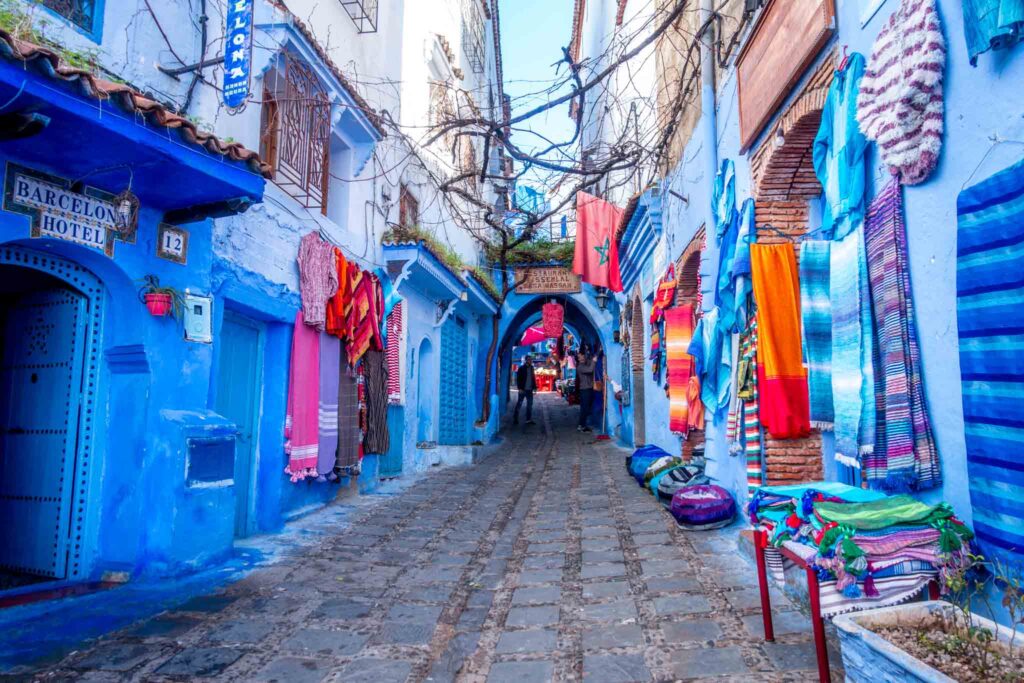
Beyond these giants, the coastal fortress town of Essaouira offers a laid-back, artsy vibe, while the blue-washed streets of Chefchaouen provide a uniquely photographic setting in the north. Your selection from this list of the best places to visit in Morocco will shape the character of your adventure.
Practical Logistics for Seamless Travel
An itinerary is only as good as its execution. A few logistical considerations will ensure your plan runs smoothly.
Transportation: For flexibility and access to remote areas, renting a car is excellent, but be prepared for mountain driving and urban navigation. Grand taxis (shared intercity cars) are a local norm for fixed routes. For longer distances, such as from Fez to Marrakech, consider domestic flights or the modern and comfortable ONCF train service.
Guides and Tours: Employing a licensed local guide for at least a half-day in the major medinas of Fez and Marrakech is a worthwhile investment. They provide context, navigate the crowds, and facilitate interactions with artisans. For the desert journey, booking a multi-day private tour or small-group excursion is often the most practical and enriching option.
Accommodation: Morocco’s lodging is part of the experience. Consider a mix: a traditional riad in the medina for atmosphere, a desert camp for adventure, and perhaps a luxury kasbah in the Dades Valley for contrast. Booking the first night or two in advance is advisable, especially in peak seasons.
Balancing Iconic Sights with Authentic Experiences
A perfect itinerary leaves space for the unexpected. Schedule-free time to wander without a map, accept a mint tea invitation, or simply watch life unfold in a local square. Balance iconic visits with smaller moments: pair a morning at the Majorelle Garden with an afternoon in a neighborhood hammam; follow a visit to the Hassan II Mosque in Casablanca with a seafood lunch in the port.
Engage with local culture beyond shopping. Attend a cooking class to learn about tagine and couscous, visit a women’s argan oil cooperative, or listen to Gnawa music in Essaouira. These immersive experiences create a richer, more personal connection to the country than sightseeing alone.
Frequently Asked Questions
What is the best time of year to visit Morocco?
The ideal times are spring (March to May) and autumn (September to November). These periods offer pleasant, warm temperatures across most of the country, perfect for city exploration, mountain hiking, and desert nights that are cool but not cold. Summer can be extremely hot, especially in the interior and desert, while winter brings cold nights to the mountains and Sahara.
How many days do I need for a good Morocco trip?
A minimum of 7-10 days allows you to experience a condensed highlight reel, typically combining Marrakech and the Sahara. For a more comprehensive tour that includes the imperial cities and a relaxed pace, 14-16 days is recommended. This longer duration reduces travel fatigue and allows for deeper cultural immersion.
Is it safe to travel independently in Morocco?
Yes, Morocco is generally very safe for independent travelers. Petty crime like pickpocketing can occur in crowded medinas, so standard precautions apply. The primary challenges for independent visitors are navigation in labyrinthine old cities and respectful cultural interaction. Dressing modestly and learning a few phrases in Arabic or French goes a long way.
Should I book a tour or travel independently?
This depends on your comfort level. First-time visitors or those with limited time often find value in a well-curated private or small-group tour, as it handles complex logistics like desert travel. Experienced travelers comfortable with negotiation and spontaneity will enjoy the freedom of independent travel, perhaps hiring local guides for specific cities or days.
What should I pack for a varied Morocco itinerary?
Pack layers. Essentials include comfortable walking shoes, a scarf (for sun, sand, and modesty when visiting religious sites), a warm jacket for desert nights and mountain areas, sunscreen, and a reusable water bottle. For women, clothing that covers shoulders and knees is respectful and practical.
Is it easy to get around between cities?
Yes, connections between major cities are good. The train network links Tangier, Rabat, Casablanca, and Marrakech reliably and comfortably. Supratours buses (affiliated with the railway) connect to destinations like Fez and Essaouira. For more remote areas like the desert valleys, grand taxis or private drivers are the standard options.
Conclusion
Crafting the perfect Morocco itinerary is an exercise in strategic curation. It involves recognizing the vast distances between different climates and cultures, then weaving them into a journey that feels both seamless and stimulating. Success lies not in how many stamps you collect in your passport, but in the depth of your experiences—the quiet of a desert sunrise, the intricate beauty of a zellij tile wall, the memorable flavor of a home-cooked meal.
By using the geographic hubs as your foundation, allocating time realistically, and balancing must-see landmarks with personal interests, you create more than a schedule. You design a narrative for your adventure. Morocco rewards the thoughtful planner with a trip that is as rich and layered as the country itself, leaving you with a collection of moments that are uniquely yours.
